
What does a good finance setup look like at pre-seed (before you raise)?
Investors do not fund an idea on a personal Monzo card. They fund a UK limited company that can receive funds, issue shares, and show where the money went.
Pre-seed finance setup is the minimum infrastructure to pass basic diligence before your first institutional round. It is not a full finance team. It is the foundation that makes seed reporting possible later.
This is not a software shopping list. It is what must be true before you raise.
What is a pre-seed finance setup?
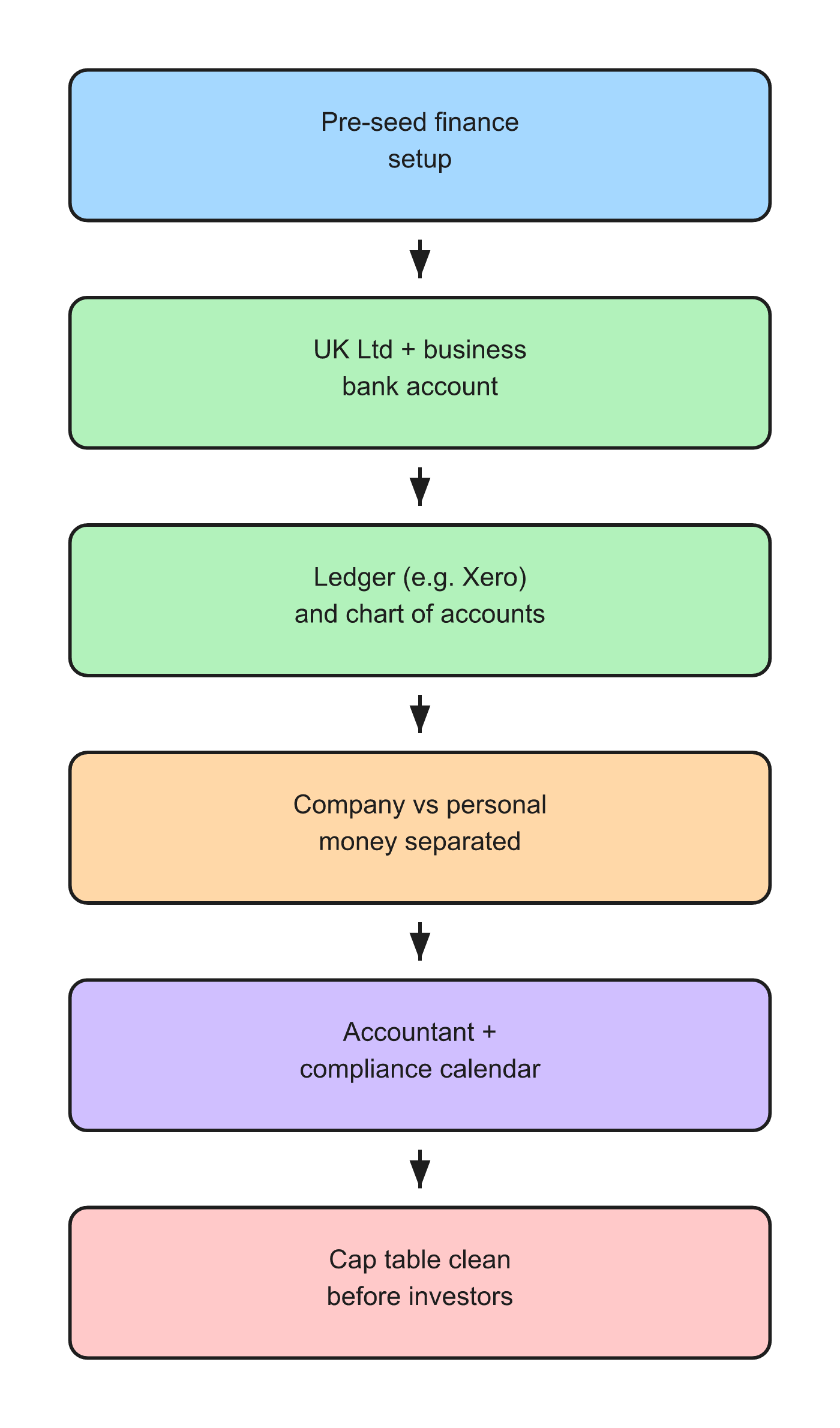
A pre-seed finance setup is the combination of legal entity, business banking, ledger, separated finances, compliance calendar, and cap table hygiene that lets you receive investment and account for it correctly.
For UK founders, that means a Ltd company, HMRC registrations as needed, and books an investor can understand without a forensic audit.
Minimum setup before you raise
SYSTEM INSIGHT / NEXT STEP
Make the next move with clarity.
If this issue is already showing up in reporting, runway, or team decisions, the next move is usually clearer with a structured finance view.
1. UK limited company in good standing
Incorporate through Companies House (or use a formation agent). Appoint directors, issue founder shares, and file confirmation statements on time.
Know your accounting reference date. First Companies House accounts deadlines arrive sooner than many founders expect.
2. Dedicated business bank account
All company income and spend flows through a business account. No company expenses on personal cards without a clear reimbursement process.
Investors and accountants flag mixed flows immediately in diligence.
3. Ledger from day one
Open Xero (or equivalent) before the first invoice. See Xero vs QuickBooks for UK startups if you are choosing software.
Minimum chart of accounts:
Revenue (or pre-revenue categories)
Hosting and software
Professional fees
Travel and subsistence
Directors' salaries or contractor costs when they start
Categorise weekly even pre-revenue. Backlog is expensive.
4. Company vs personal money
Directors can lend to or take loans from the company, but those movements must be documented and reflected in the books.
Personal consulting income outside the Ltd is separate for tax and MTD. Do not blend ledgers.
5. Accountant relationship (lightweight)
At pre-seed you may not need monthly management accounts. You do need:
Someone who files confirmation statements and advises on first year-end
Guidance on when to register for VAT and PAYE
A plan for first annual accounts and CT600
Cheap one-off filing shops without startup context often miss investor expectations.
6. Cap table and SEIS/EIS readiness
Founder shares, any early angels, and EMI or ASA agreements tracked in one cap table tool or controlled spreadsheet.
Messy cap tables delay seed closes. Clean them before term sheet, not during.
If you use SEIS or EIS, advance assurance and compliance matter. Get advice early.
7. Basic compliance calendar
Even pre-revenue companies have filings:
Item | When |
Confirmation statement | At least annually |
Annual accounts | After first year end (often 9 to 21 months from incorporation) |
Corporation tax | When trading produces profits |
PAYE | When you hire employees |
VAT | When taxable turnover crosses threshold |
Put dates in a shared calendar before you are fundraising.
What pre-seed setup is not
Not a fractional CFO on day one. See fractional CFO when board and fundraise complexity appear.
Not monthly board packs before you have a board rhythm.
Not optimising R&D claims before you have payroll and project records. See R&D for software startups when engineering spend is material.
Not duplicating the live CMS "finance stack 2025" tool roundup. This guide is the minimum before raise.
What changes right after seed
Pre-seed setup becomes post-seed bookkeeping: monthly close, investor updates, payroll at scale, and often outsourced finance ops.
Founders who skip pre-seed hygiene pay catch-up fees in the seed round itself.
In practice
Good pre-seed setup is boring: one company, one bank, one ledger, clean shares, known filing dates.
That boring base is what makes investor-ready signals achievable when you start raising.
FAQs
What finance setup do UK startups need before raising?
UK Ltd, business bank account, accounting software, separated finances, cap table records, and awareness of Companies House and HMRC deadlines.
Do pre-revenue startups need accounting software?
Yes. It is cheaper to categorise from transaction one than rebuild 18 months later.
When should a pre-seed startup register for VAT?
When taxable turnover approaches or exceeds the VAT threshold, or when voluntary registration makes commercial sense. Take advice for your model.
Is a finance stack the same as a finance team?
No. Stack is tools and basics. A finance team (in-house or outsourced) runs process and reporting after complexity grows.
What is the biggest pre-seed finance mistake?
Mixing personal and company money with no ledger discipline.
**Setting up before your first raise?** Talk to an Expert or see pricing.


